Tripura: When Consciousness Answers
In the modern world the word consciousness is often used in a narrow way. We usually mean the moral awareness that guides human behavior — the inner compass that allows someone to act calmly and wisely in difficult situations.
But the ancient teachings of the Vedas and Tantras speak of something far deeper.
In texts such as Tripura Rahasya, consciousness is not merely a function of the mind. It is the source from which mind, space, time, experience, and the entire perceived universe arise — the world of all living beings and the unmoving forms of nature.
That supreme consciousness is revered in the Sri Vidya tradition as Tripura, the Divine Mother who presides over the three states of existence: waking, dream, and deep sleep.
Recently, while working on Chapter 10 of Tripura Rahasya, I found myself wrestling with exactly this idea.
The challenge was not philosophical curiosity but communication. How could the full spectrum of consciousness described in the scripture be explained to a modern audience without losing the depth of the original text? Modern methods often rush toward conclusions, while the traditional teaching unfolds carefully, preserving nuance.
The effort left the mind unsettled.
Perhaps it even troubled the Divine Mother whose very nature that chapter attempts to describe.
What followed over the next twenty-four hours felt like a quiet response.
One night I dreamt that my wife and I were walking down a street filled with undesirable elements. The place felt tense and unpredictable. Yet she moved through it calmly, almost like someone who belonged there. She neither stared nor reacted to anyone around us. She simply walked forward naturally, speaking as if nothing unusual was happening.
In the dream I remember feeling proud of her composure.
The next morning during our walk with our small dog Penny, I casually mentioned the dream to her. I did not describe it in detail — only that I had dreamt we were walking through a place that felt unsafe and that I had felt proud of how calmly she handled herself.
The dream seemed interesting at the time, but I did not yet realize how soon life would echo it.
The following morning, during the same early walk, something unexpected happened.
It was still dark when my wife quietly said, “Don’t stare — there’s a coyote.”
A large one was crossing nearby. With a small pet beside us, the situation could easily have become tense.
Yet she handled the moment with remarkable calm — steady, observant, composed.
We continued walking until we reached the point where we normally turn back. Now we had a choice: take the larger main road, or return the same way we had come, where the coyote had just crossed.
“I have the noise horn for coyotes,” she said calmly.
So we chose the same path.
We walked back the same way, alert but without panic, ready to warn any other walkers we might encounter.
At that moment something struck me deeply.
Just the night before I had dreamt of her moving calmly through danger. Now, in the waking world, she was doing exactly that.
I turned to her and said again the same words I had spoken in the dream:
“I’m proud of you.”
Two different worlds.
Two different scenes.
Yet the same two subjects — my wife and I — moving through them with the same awareness.
Dream and waking, two projections of experience, yet guided by one consciousness.
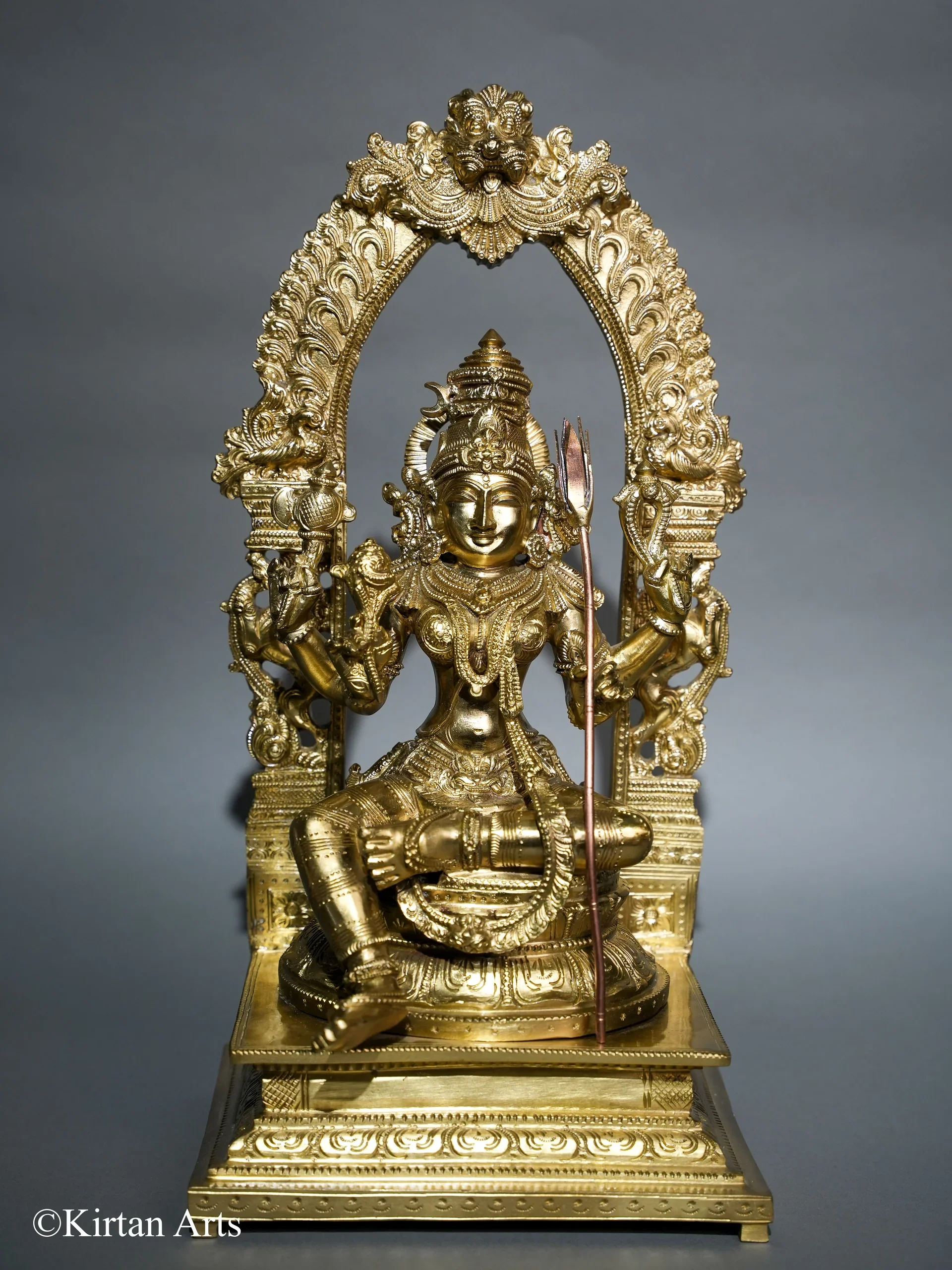
Later that day I stopped briefly at an antique shop. Out of the corner of my eye sat a beautiful murti of Lalita Tripura Sundari, the Divine Mother of the Sri Vidya tradition.
In this tradition Lalita is not merely a deity among others. She is the supreme consciousness itself — the power behind creation, sustenance, and transformation.
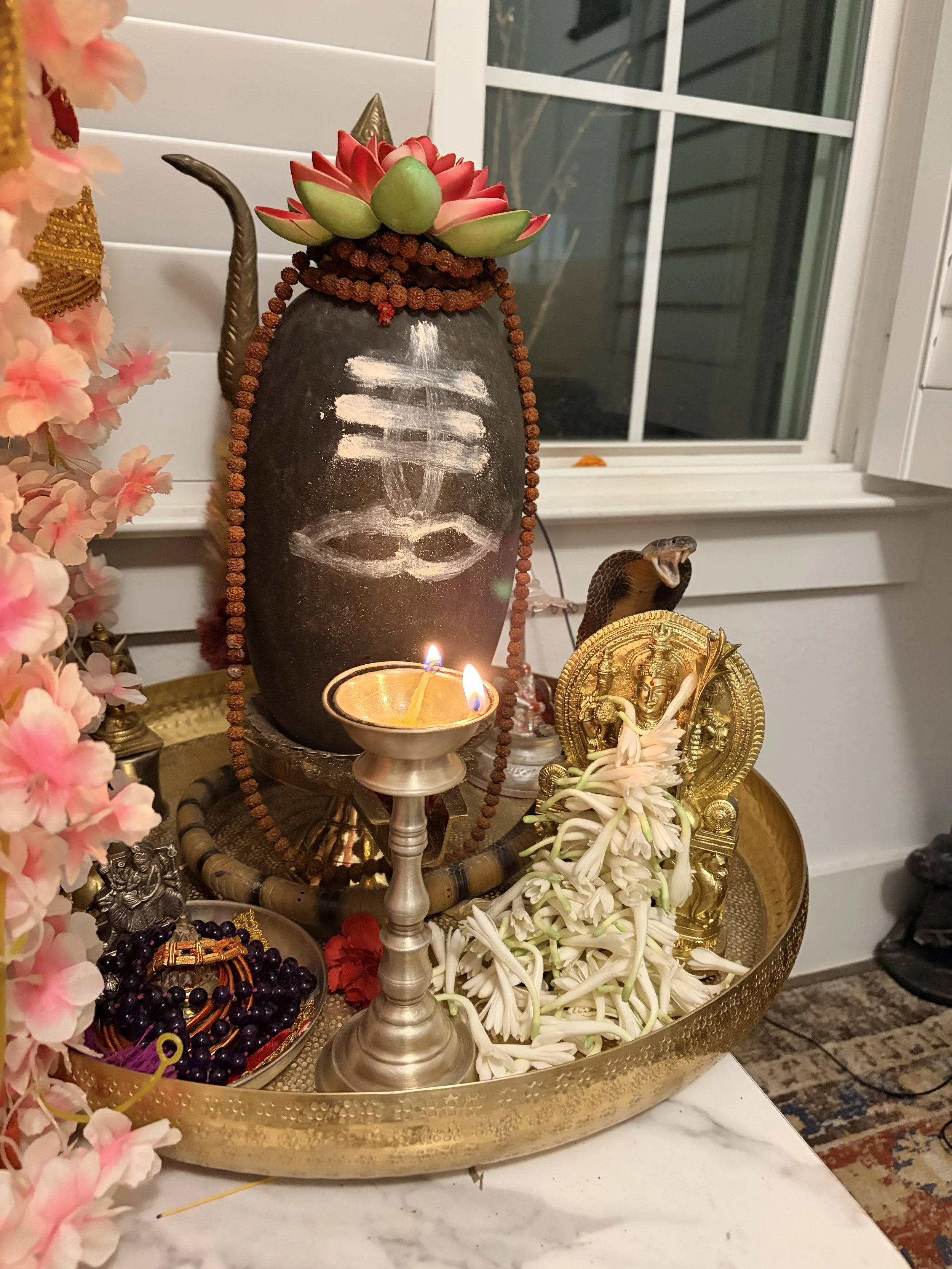
The next morning during puja I offered white tuberose flowers and silently chanted the Lalitha Sahasranama.
Among the thousand sacred names, one line suddenly stood out with striking clarity:
Antarmukha Samaradhya, Bahirmukha Sudurlabha.
She is easily worshipped by those who turn inward;
She is difficult to attain for those whose attention remains outward.
The words lingered in the heart long after the chant ended.
Later that afternoon, during a brief half-sleep, the presence appeared again.
Devi appeared smiling, holding a spinning discus in her raised hand — the Sudarshana, symbol of the Vaishnavi energythat sustains the vast waking universe.
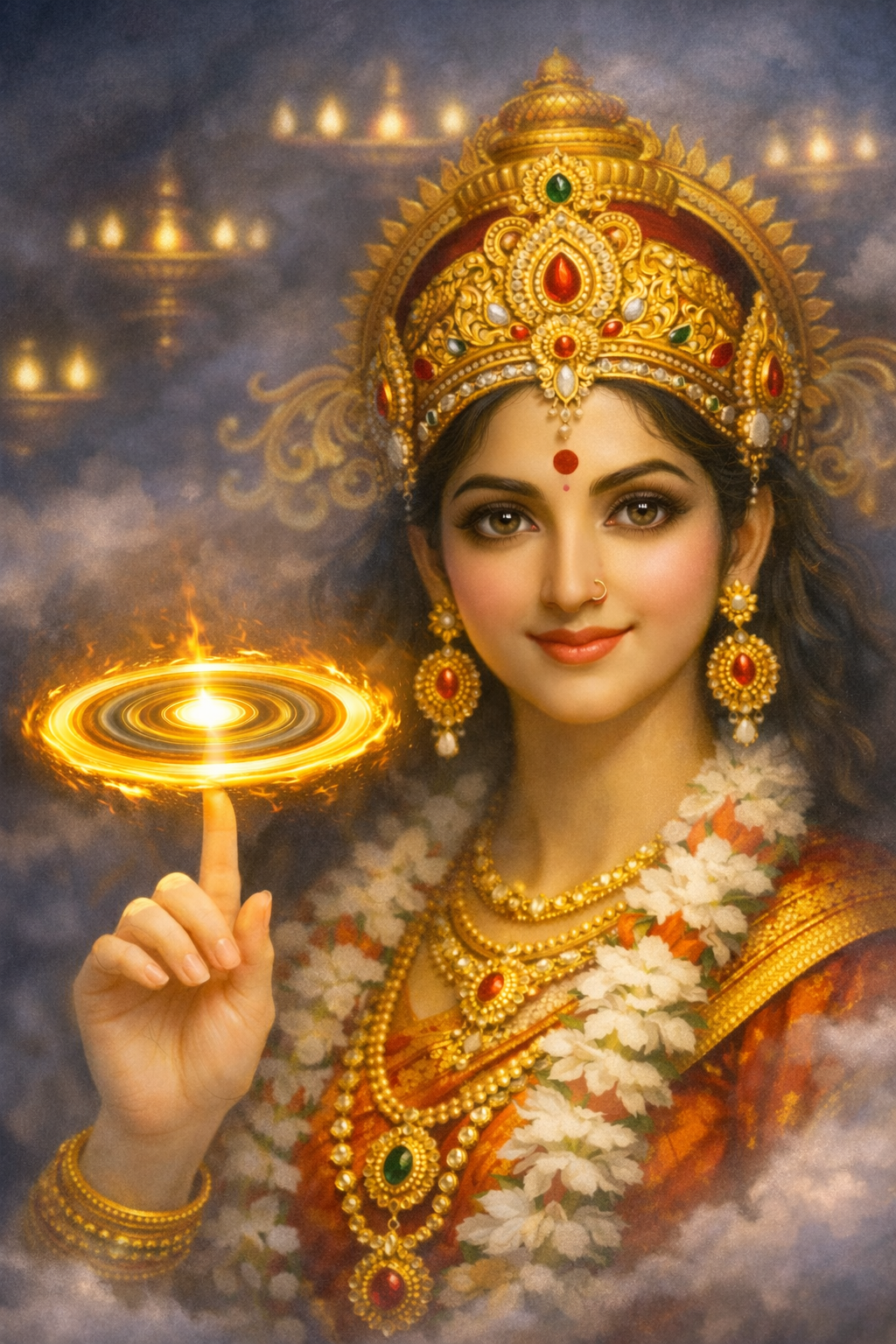
The moment lasted only seconds, yet it carried a stillness that seemed larger than the mind itself.
When I woke fully, another detail quietly revealed itself.
The time was 2:23, which reduces to 7 in numerology.
The date — Tuesday, the March 10 — also reduces to 7 [3+3+1].
And the lunar day was Saptami, the seventh tithi.
Three appearances of seven.
Three times seven.
And when reduced again, 21 becomes 3.
Three — the sacred signature of Tripura, the Divine Mother who moves through the three states of consciousness.
Seen together, the events formed a quiet pattern.
A dream rehearsing courage.
A waking moment mirroring the dream.
A night of Ida and Pingala in subtle dialogue.
An unexpected sighting of Lalita.
A verse from the Sahasranama pointing awareness inward.
A vision of Devi holding the sustaining discus.
And finally, the quiet signature of time itself.
Only then did something become clear.
Just twenty-four hours earlier I had been struggling to explain consciousness while working on Chapter 10 of Tripura Rahasya.
The answer did not arrive as an argument.
Instead, it unfolded as experience.
Dream and waking revealed themselves as two projections of the same consciousness.
The subtle currents of Ida and Pingala showed its movement within the inner world.
Devotion turned awareness inward through the Sahasranama.
And the vision of Devi reminded me that the same consciousness sustains the universe itself.
What I had been trying to explain through reasoning, the Divine Mother demonstrated through life.
In Sri Vidya this unfolding is called anugraha — grace.
Grace rarely arrives as spectacle.
More often it appears as acknowledgment — a quiet reassurance that devotion has been seen and that the questions we struggle with have been heard.
Within a single day the answer had appeared everywhere: in dream, in waking life, in subtle awareness, in scripture, in symbol, and even in time itself.
That is the mystery the sages called Tripura.
And sometimes, through grace, the Divine Mother allows us to see that the consciousness we struggle to understand has been guiding us all along.