The Dancing Peacock
The previous day had ended with quiet contemplation, attention resting gently at the space of the third eye. Meditation had been steady, the mind calm enough to watch its own movements without being carried away by them.
Then, during that stillness, an image appeared.
A peacock.
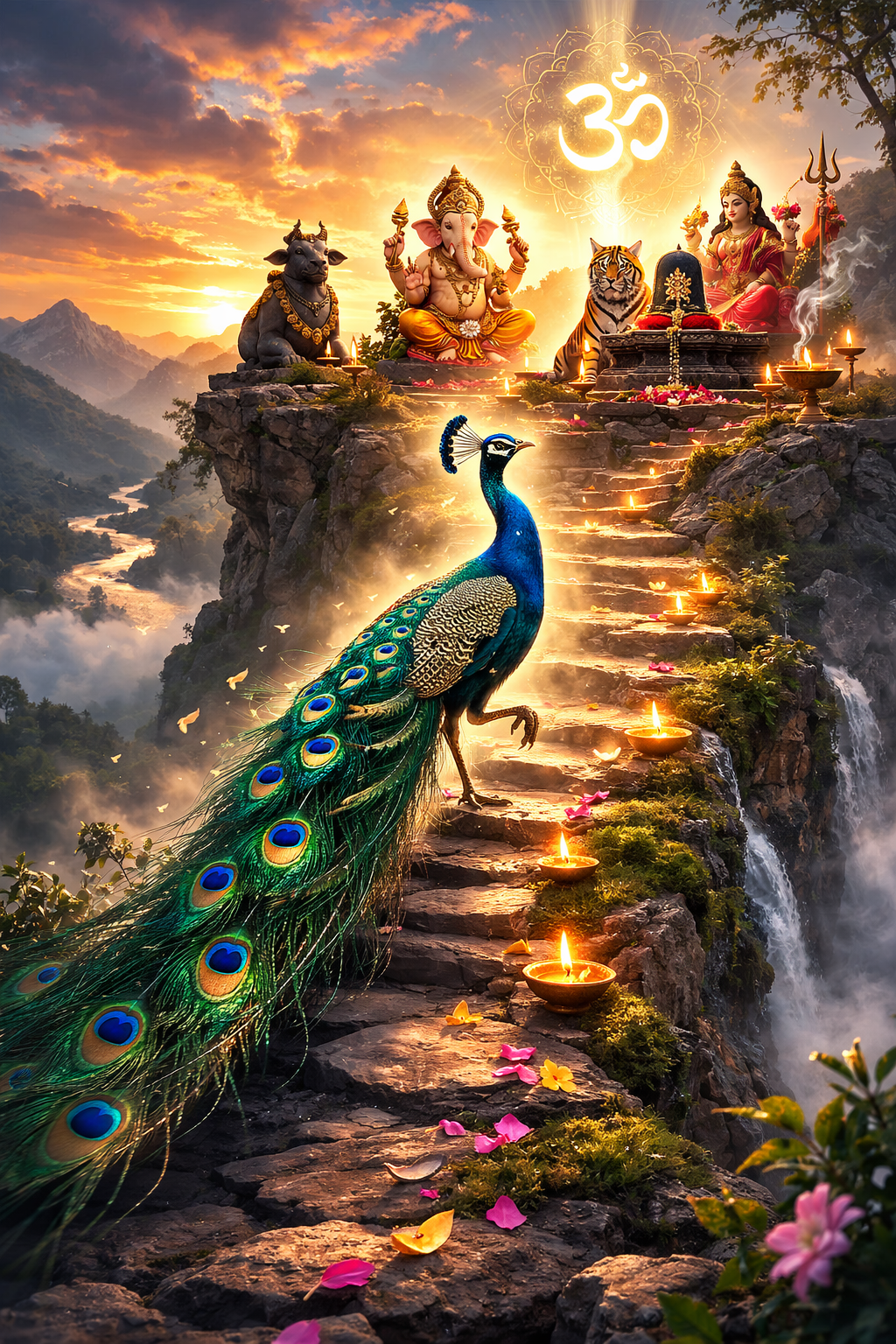
Not the familiar spectacle seen in gardens with its feathers fully spread, but a poised side profile. Its neck curved upward, the beak lifted slightly as though ascending toward something above.
For a moment the bird seemed almost to dance — not with noise or display, but with a graceful upward motion.
The image lingered long enough to be clearly seen, and then it dissolved back into silence.
Later, reflection brought its meaning into view.
In the sacred symbolism of India, the peacock is known for its ability to consume snakes — transforming poison into beauty. The snakes represent the disturbances of the mind: desire, anger, greed, delusion, pride, and jealousy. When these impulses dominate, the mind remains restless and heavy.
But when awareness begins to master them, something remarkable happens.
The very forces that once disturbed the seeker become fuel for transformation.
What once appeared as poison begins to reveal unexpected beauty.
That is why the peacock is often associated with higher knowledge. It represents the mind that has learned to rise above the turbulence of its own impulses.
Seen from the side, the peacock’s curved neck and lifted head even resemble the flowing contour of AUM, the primordial vibration underlying creation.
And when the peacock dances, tradition says rain is near.
Perhaps that dance is a reminder that the journey of discipline and devotion is not meant to remain austere forever.
Beyond effort lies ānanda — the quiet bliss that belongs to the nature of the Self itself.
The sages describe reality as sat–cit–ānanda: existence, consciousness, and bliss.
When the mind becomes steady and the senses no longer pull awareness in every direction, that bliss begins to show itself naturally.
The peacock does not struggle upward.
It rises gracefully.
And in its dance there is a quiet assurance that the path of practice, when pursued with sincerity, ultimately blossoms not in hardship but in joy.